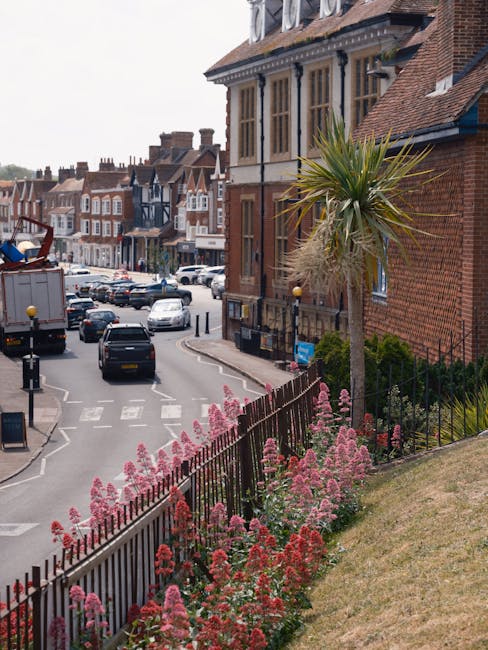
What to know about council verge planting rules and permissions
If you've ever stood at the edge of your front garden, looked at the strip of grass between the pavement and the road, and thought, "That could be a lovely little planting bed," you're not alone. Council verge planting rules and permissions are one of those topics that sound simple until you start asking who actually owns the land, what counts as safe, and whether you need permission first. The short version? Sometimes you can plant, sometimes you need consent, and sometimes the answer depends on the council, the road, and the exact verge in question.
This guide breaks the whole thing down in plain English. You'll learn how verge planting usually works in the UK, where the common grey areas are, what councils tend to care about, and how to avoid the kind of mistake that leads to plants being removed, complaints from neighbours, or a very awkward conversation about sightlines. Let's face it, nobody wants to spend a sunny Saturday digging only to find the council has different ideas.
By the end, you'll know what to check, what to ask, and how to move forward with confidence. If you're planning a verge project as part of a wider garden improvement, it may also help to look at our background and approach, or review pricing and quotes if you're comparing professional help.
Table of Contents
- Why council verge planting rules and permissions matter
- How verge planting permissions usually work
- Key benefits and practical advantages
- Who this is for and when it makes sense
- Step-by-step guidance
- Expert tips for better results
- Common mistakes to avoid
- Tools, resources and recommendations
- Law, compliance, standards, or best practice
- Options, methods, or comparison table
- Case study or real-world example
- Practical checklist
- Conclusion
- Frequently asked questions
Why council verge planting rules and permissions matter
Verges sit in a funny place. They often look like part of the garden, but they may be highway land, adopted land, or an area the council maintains for public safety and access. That distinction matters more than people expect. If you plant without checking first, the biggest issues usually come down to safety, maintenance, and ownership. A tidy herb bed may seem harmless, but if it blocks a driver's view, creates a trip hazard, or interferes with underground services, it can become a problem fast.
Councils also worry about consistency. One resident may want roses, another might want a hedge, and a third could decide to add boulders or edging stones. On a quiet street that might feel charming. On a busier road it can create a mess, visually and practically. Verge planting rules exist to balance local greening with access for pedestrians, wheelchairs, prams, bin collection, street cleaning, and maintenance crews. It sounds dry, but it's actually about keeping a street usable.
There's also the issue of liability. If a planted verge is damaged, causes an obstruction, or makes someone trip, the question of responsibility can become awkward very quickly. That's why many councils want to know what's being planted, who will maintain it, and whether any approval is required. A small patch of lavender may be fine; a raised timber bed with sharp corners may raise eyebrows. Fair enough, really.
Expert summary: Treat the verge as shared public-facing space unless you have clear confirmation otherwise. The safest approach is to check ownership, ask about permissions, and design with public access in mind from the start.
How council verge planting rules and permissions usually work
There is no single nationwide set of verge planting rules that works the same in every place. In practice, councils set their own approach within broader highway and safety responsibilities. That means two neighbouring areas can have quite different expectations. One may allow low planting with a quick notification process. Another may require written approval before any soil is disturbed. A third might allow planting only if the verge remains open and unobstructed.
The first step is usually to identify who controls the land. It might be the council, the highway authority, or in some cases a housing association or private owner. If the verge is part of the public highway, councils often care about:
- visibility for drivers at junctions and driveways
- safe pedestrian access along the pavement
- access for grass cutting and maintenance
- protection of trees, utilities, and drainage
- whether the planting could spread into the roadway
Permissions can be informal or formal. Sometimes the council simply asks for a plan and gives a nod. In other cases, you may need written consent, a licence, or an agreement about maintenance responsibilities. In some places, the council may prefer that residents do not plant the verge at all unless it forms part of an approved community scheme. A little bureaucratic? Yes. But often it is there for a reason.
It helps to think of verge planting in three layers:
- Ownership: who controls the land?
- Permission: do you need approval before planting?
- Maintenance: who looks after it once it's planted?
Those layers can be easy to confuse. Someone may assume that because the verge is outside their house, it belongs to them. Not always. And even if you are allowed to plant, the council may still reserve the right to trim, inspect, or remove anything that becomes unsafe. Slightly annoying, perhaps, but good to know before you buy ten bags of compost.
Key benefits and practical advantages
When verge planting is allowed and managed properly, it can improve a street in subtle but meaningful ways. A well-planned verge softens hard kerbs and pavements, brings seasonal colour into the street, and can create a more welcoming feel without needing a full front-garden redesign. On a grey morning, a strip of pollinator-friendly planting can make the whole row look less bleak. You notice it. Everyone does.
There are also practical advantages:
- Improved street appearance: a neat verge can make a property and street feel better cared for.
- Pollinator value: low, wildlife-friendly planting may support bees and other insects.
- Soil stability: ground cover can reduce bare soil and some forms of erosion.
- Neighbourhood engagement: shared verge projects can bring residents together.
- Personal satisfaction: truth be told, it simply feels good to brighten a dull stretch of road.
That said, the benefit only holds if the planting is appropriate for the site. A verge is not the same as a private border. It gets walked past, mowed, and sometimes ignored by hurried pedestrians and delivery drivers. So the design has to be resilient. The best verge schemes are usually low, tidy, and easy to maintain, with planting that does not flop over the pavement or block sightlines.
There is another quiet benefit people overlook: clarity. When you follow the proper permissions process, you reduce the chance of later disputes. That can matter just as much as the flowers themselves. Peace of mind is underrated, isn't it?
Who this is for and when it makes sense
This topic is relevant to a few different people. If you're wondering whether verge planting is something you can do at all, you probably fit into one of these groups:
- Homeowners who want to improve the strip outside their property
- Tenants who would like to make the street frontage greener but need to know what is allowed
- Residents' groups organising a small community planting project
- Gardeners who have been asked to create a neat planting scheme near a pavement or road
- Property managers responsible for shared frontages or edges of developments
It makes most sense when the verge is visually neglected, the road is relatively low traffic, and the planting can remain low and manageable. It can also be a good option where a property has a tiny front garden and the verge offers a chance to add colour without losing access.
But it may not make sense where the road is busy, visibility is poor, utility works are frequent, or the council already maintains the strip in a way that planting would interfere with. In those cases, a simple tidy-up, mulching, or approved container planting elsewhere may be a better route. Sometimes the smartest design choice is the one you don't make. Bit of a gardener's lesson there.
Step-by-step guidance
If you want to approach verge planting properly, don't start with plants. Start with the rules. That sounds less fun, I know, but it saves a lot of hassle. Here's a sensible sequence to follow.
1. Confirm who owns or manages the verge
Begin by checking whether the strip is council land, highway land, or part of your property. This is the foundation of everything else. If ownership is unclear, ask the council or the relevant local authority department. You do not need to guess. Guessing is where people get into trouble.
2. Ask whether permission is needed
Some councils have formal permission processes; others have guidance that acts more like a local rulebook. Ask whether you need written consent, whether there are design restrictions, and whether maintenance remains your responsibility. Also ask whether the council may need drawings, photos, or a simple planting plan.
3. Check for safety and access issues
Look carefully at visibility, footway width, parking, driveways, dropped kerbs, bins, and crossings. Would your plants block the view of a driver pulling out? Would a pram still pass comfortably? Could someone with limited mobility still use the pavement without squeezing past foliage? These are the questions that matter.
4. Review underground and surface services
Verge areas can hide utilities, drainage runs, chambers, and cable routes. Avoid digging blindly. If you are planning anything that involves excavation, edging, or deep-rooting shrubs, check what may be below ground. This is not the place for a heroic spade-first approach.
5. Choose a low-risk planting design
The safest verge planting designs are usually low-growing, non-invasive, and easy to keep within bounds. Think groundcovers, small perennials, bulbs, or a simple wildflower mix where appropriate. Avoid anything spiky, sprawling, or tall enough to create a sightline issue.
6. Keep edging and materials modest
If you use edging, keep it soft and unobtrusive. Councils often dislike hard edges, raised borders, timber frames, or decorative stones on verges because they can become hazards. A clean soil edge or very subtle boundary is usually safer than a constructed feature.
7. Maintain it regularly
Planting is the easy bit. Keeping it neat through rain, drought, leaf fall, and the occasional mower is the real job. If you cannot maintain it, think twice. A shabby verge is worse than a bare one. Harsh, but true.
8. Keep records
Save emails, permissions, plans, and photos. If there is ever a question later, being able to show what was agreed can be incredibly useful. The boring admin is the bit that saves you, as usual.
Expert tips for better results
Over the years, one thing becomes clear: the best verge projects are the ones that stay simple. Fancy designs look good in a sketch and then fall apart when a hedge trimmer comes near them or a wet October arrives. If you want your planting to last, keep these points in mind.
Keep the height low near road edges
This is probably the single most important design rule. Anything near a driveway, junction, crossing point, or sharp bend should stay low enough not to block sightlines. Even attractive plants can become a nuisance if they obscure a child on a bike or a car emerging from a side road.
Choose plants that behave themselves
Pick plants that stay within bounds and do not send roots aggressively into cracks or service covers. Hardy perennials, bulbs, and resilient ground cover often work better than large shrubs. If a plant has a habit of flopping, self-seeding everywhere, or growing into a thicket by midsummer, it may not be the best verge companion.
Think about maintenance from day one
Ask yourself who will deadhead, water, weed, and tidy the verge in July and then again after the first frost. A planting plan is only as good as the maintenance plan. In our experience, people often underestimate this part. It looks easy in April; by August, things can feel very different.
Use a soft, street-friendly palette
Subtle planting tends to age better than overly fussy schemes. Native or wildlife-friendly species can work well where they suit the soil and exposure, but the real test is whether they handle roadside conditions. Wind, compacted soil, dog traffic, salt, and patchy watering all make life harder.
Stay away from anything that could be interpreted as blocking the highway
This includes big containers, timber planters, rocks, and decorative structures. To be fair, they can look lovely in a private garden. On a verge, they often create more issues than they solve.
Talk to neighbours early
If the verge is visible from several homes, a quick conversation can prevent complaints later. A neighbour who knows what you are doing is less likely to assume you've gone rogue with the front of the street. Small thing, big difference.
Common mistakes to avoid
Most verge problems are predictable. That is the frustrating part. They usually come from rushing, assuming, or using garden habits that work perfectly well inside a boundary but not beside a road. Here are the usual culprits.
- Planting before checking permission: never assume it's fine just because the strip is outside your home.
- Using tall or dense planting near sightlines: visibility matters more than prettiness.
- Adding hard landscaping without approval: raised beds, stones, timber frames, and edging can cause complaints.
- Choosing invasive or vigorous species: anything that spreads fast can become a maintenance headache.
- Ignoring underground services: roots and digging can interfere with utilities or drainage.
- Forgetting ongoing care: a neglected verge quickly looks scruffy and can trigger removal requests.
- Assuming neighbours will love it: they might, or they might not. Best not to gamble on that.
One subtle mistake is overdesigning the space. People sometimes want to make the verge "special" and end up making it awkward. A simple, clean, low planting scheme is often the strongest choice. Not glamorous, but dependable. And dependable wins here.
Tools, resources and recommendations
You do not need a complicated toolkit for a well-planned verge project, but you do need the right habits. A little prep goes a long way.
Useful tools
- spade or border fork for shallow work
- hand trowel for planting and weeding
- garden gloves with decent grip
- watering can or hose access if permitted
- string line or markers to keep planting neat
- measuring tape for width and spacing
- camera or phone for recording the existing condition and any permission paperwork
Practical resources to gather
- your council's verge or highway guidance, if available
- photos of the verge from several angles
- a rough sketch showing plant positions
- a note of any pavement widths, driveways, or visibility concerns
- records of any replies or approvals you receive
If you plan to bring in professional help, it is worth asking how they manage access, public safety, and waste. Reputable teams should be clear about these things. You can also review health and safety standards and insurance and safety information when comparing providers. If you are sensitive about material disposal or eco-friendly choices, recycling and sustainability practices are worth looking at too.
If you want to ask a question or discuss whether a verge project is suitable for your property, get in touch with the team. A quick conversation can save a surprising amount of back-and-forth later on.
Law, compliance, standards, or best practice
Because verge planting touches public land, pedestrian access, and road safety, it is wise to treat it as a permissions-and-compliance issue, not just a gardening task. In the UK, councils and highway authorities generally expect public land to remain safe, passable, and maintainable. The exact wording and process vary, but the underlying principles are consistent.
Best practice usually means:
- checking land ownership before touching the verge
- getting any required permission in writing
- keeping planting low and non-obstructive
- avoiding materials or structures that create trip hazards
- not blocking access for maintenance, bins, or emergency services
- protecting sightlines at junctions and driveways
- taking responsibility for upkeep if the council allows planting on that basis
If you are not sure where the boundary lies between private frontage and highway land, ask. Seriously, ask. That one step can prevent a lot of confusion. Councils also tend to be more receptive when residents show they have thought about safety, access, and long-term care. A tidy plan sent in advance usually lands better than a surprise trench of lavender appearing overnight.
Where a verge is part of a street with other residents nearby, it can help to think about consistency and community impact. What looks good on one plot may look mismatched across a whole row if everyone does something different. A little restraint goes a long way.
Options, methods, or comparison table
Different approaches suit different sites. If you are trying to decide what is most realistic, this comparison can help narrow it down.
| Approach | Best for | Main benefit | Main risk |
|---|---|---|---|
| Low planting on approved verge | Quiet streets, clear permission, simple maintenance | Attractive and practical with modest upkeep | Can be removed if permission is unclear |
| Wildflower-style verge planting | Larger strips, community schemes, lower-maintenance goals | Good seasonal interest and wildlife value | Can look untidy if not managed well |
| Decorative raised verge beds | Rare cases where the council allows them | Defined borders and easier control of soil | Often seen as a trip hazard or obstruction |
| Container planting near frontage | Where verge planting is not permitted | More control and less ground disturbance | Can still obstruct paths or be removed if poorly placed |
In many real-world situations, the simplest option is the strongest. If the council is open to planting, a low-profile border or groundcover scheme is often easier to approve than a more decorative build. If the council is not open to planting, a private-frontage alternative may be the safer route. There is no prize for making this harder than it needs to be.
Case study or real-world example
Imagine a typical London street with terraced homes, parked cars, and a narrow verge strip outside the pavement. One resident wants to brighten the frontage with a small pollinator-friendly bed. Instead of digging straight in, they first check whether the verge is council-managed and whether any local permission is required. They find that low planting is possible, but only if the verge remains clear enough for pedestrians and maintenance.
So they keep the design simple: low-growing plants, no hard edging, and a small mulch layer to reduce weeds. They avoid anything that would lean into the pavement or create a visual barrier near the driveway. A week later, the neighbour with a buggy comments that it is noticeably easier to walk past than expected, which is usually a good sign. The finished strip adds colour without looking precious.
Now compare that with a different scenario. Another resident adds a raised timber edge, some ornamental rocks, and tall shrubs because they want a "proper" mini-garden. It may look good for a month. Then a complaint arrives after someone trips near the edge, and the council asks for changes. Same idea, very different result. The lesson is not that verge planting is risky. It's that the design has to suit a public-facing space, not just a private taste.
Practical checklist
Use this checklist before you plant anything on a council verge:
- Have I confirmed who owns or manages the verge?
- Have I checked whether written permission is needed?
- Have I looked for sightline, access, and safety issues?
- Do I know whether there are underground services nearby?
- Is my planting low, tidy, and easy to maintain?
- Have I avoided hard edges, raised structures, and trip hazards?
- Will the planting still work in wet, dry, windy, and winter conditions?
- Have I thought about who will maintain it over time?
- Do I have photos, plans, and permission records saved?
- Have I spoken to neighbours if the verge is highly visible or shared?
If you can tick most of those off, you are in a much better place. If not, pause and check again. A small delay now is better than rework later. It really is.
Conclusion
What to know about council verge planting rules and permissions comes down to a simple idea: treat the verge as shared, public-facing space until you know otherwise. Once you know who controls it, what permission is needed, and how the planting will affect safety and access, the rest becomes much easier. Keep the design low, manageable, and respectful of the street, and you'll usually avoid the common problems that trip people up.
The best verge projects are rarely the flashiest. They are the ones that look natural, stay tidy, and cause no grief for anyone passing by. That may sound modest, but honestly, modest is often exactly right here.
Get a free quote today and see how much you can save.
And if you're still weighing up whether your verge idea is worth pursuing, take it one step at a time. A careful start tends to lead to the best outcome, and a well-planned strip of planting can make a street feel warmer almost overnight.
Frequently Asked Questions
Do I need permission to plant on a council verge?
Often, yes, or at least some form of approval or confirmation. It depends on whether the verge is council-controlled highway land and how your local authority handles planting. Always check first rather than assuming it is automatically allowed.
Can the council remove plants I put on the verge?
If the verge is public land and the planting has not been approved, the council may ask for it to be removed. Even where planting is allowed, anything that becomes unsafe or obstructive can be cut back or removed.
What kind of plants are usually safest for a verge?
Low-growing, non-invasive, easy-to-maintain plants are usually the safest choice. Groundcovers, smaller perennials, and simple bulb plantings often work better than tall shrubs or aggressive spreaders.
Are raised beds allowed on verges?
Sometimes, but not often without specific permission. Raised beds can create trip hazards, maintenance issues, or access problems, so many councils are cautious about them.
Can I plant the verge outside my house if I pay council tax there?
Paying council tax does not automatically give ownership or planting rights over the verge. The land may still belong to the council or highway authority, so the same permission checks apply.
How do I know if the verge is mine or council land?
Check your property documents first, then ask the council if anything is unclear. Boundary confusion is very common, especially on older streets where the frontage layout is a bit messy.
What if I want to plant with my neighbours as a shared project?
That can work well, and councils may be more receptive to a well-organised community plan. You will still need to check permissions, agree on maintenance, and keep the design practical for public use.
Will council verge planting affect insurance or liability?
It can, especially if the planting creates an obstruction or hazard. That is why it is sensible to keep records, get permission where needed, and make sure any design is safe and accessible.
Can I use stones, timber, or decorative edging on a verge?
Those features are often discouraged because they can be trip hazards or obstruct maintenance. If you want to use them, you should check with the council first rather than assuming they are acceptable.
What is the best way to start if I am not sure what the rules are?
Start with ownership and permission. Ask the council who controls the verge, whether planting is allowed, and whether any written approval is required. That first conversation can save a lot of time later.
Is verge planting worth it if the area is busy?
Sometimes, but only if the design is very low-risk and the council is comfortable with it. On busy roads, the safety and visibility constraints can outweigh the benefits, so an alternative may be more sensible.
Who can help if I want professional guidance?
A local gardening professional or landscape team can help assess the space, suggest suitable planting, and advise on practical maintenance. If you need to talk through a project, you can always start with the contact page and ask for the right next step.
Need to keep things tidy, safe, and council-friendly? Our team can help you plan it properly from the start.